
About Your Water
Water Sources
East Orange County Water District is committed to providing safe, reliable, high-quality water service while responsibly managing wastewater collection for our community. Our approach focuses on careful water quality monitoring, proactive system maintenance and thoughtful planning to meet regulatory requirements and community needs.
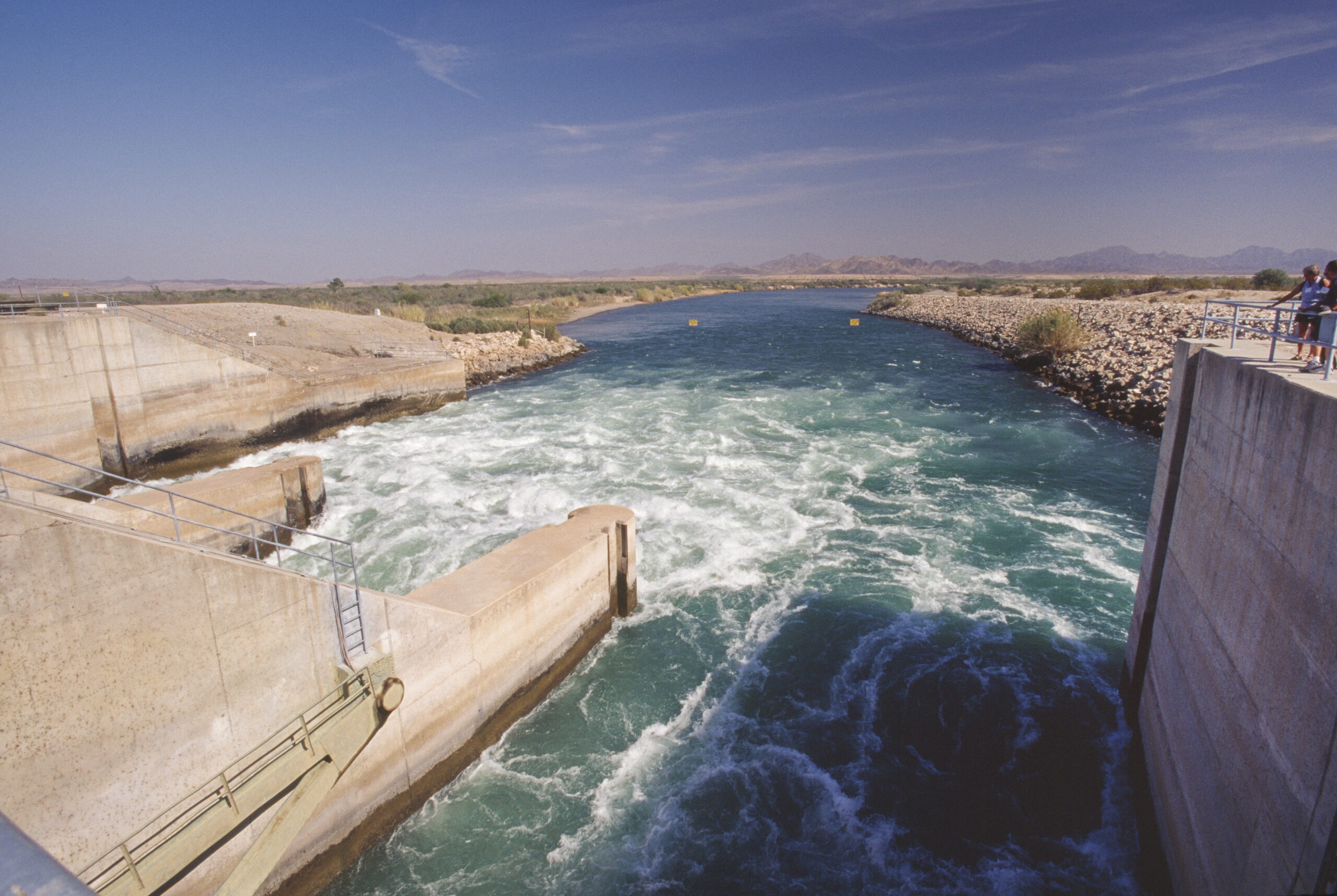
The District relies on imported water to replenish groundwater supplies. Imported water from Northern California through the State Water Project and from the Colorado River, is used both to meet customer demand and to recharge local groundwater basins. This recharge helps store water underground for future use and supports long-term water supply reliability.
Water Use & Reliability
Understanding how your water system works can help manage your bill, conserve resources, and respond quickly if something doesn’t seem right. This guide is designed to help you check for service issues and understand what may be the cause and know what steps to take if you experience low pressure, an interruption in service, or a possible leak.
Understanding Your Water Meter
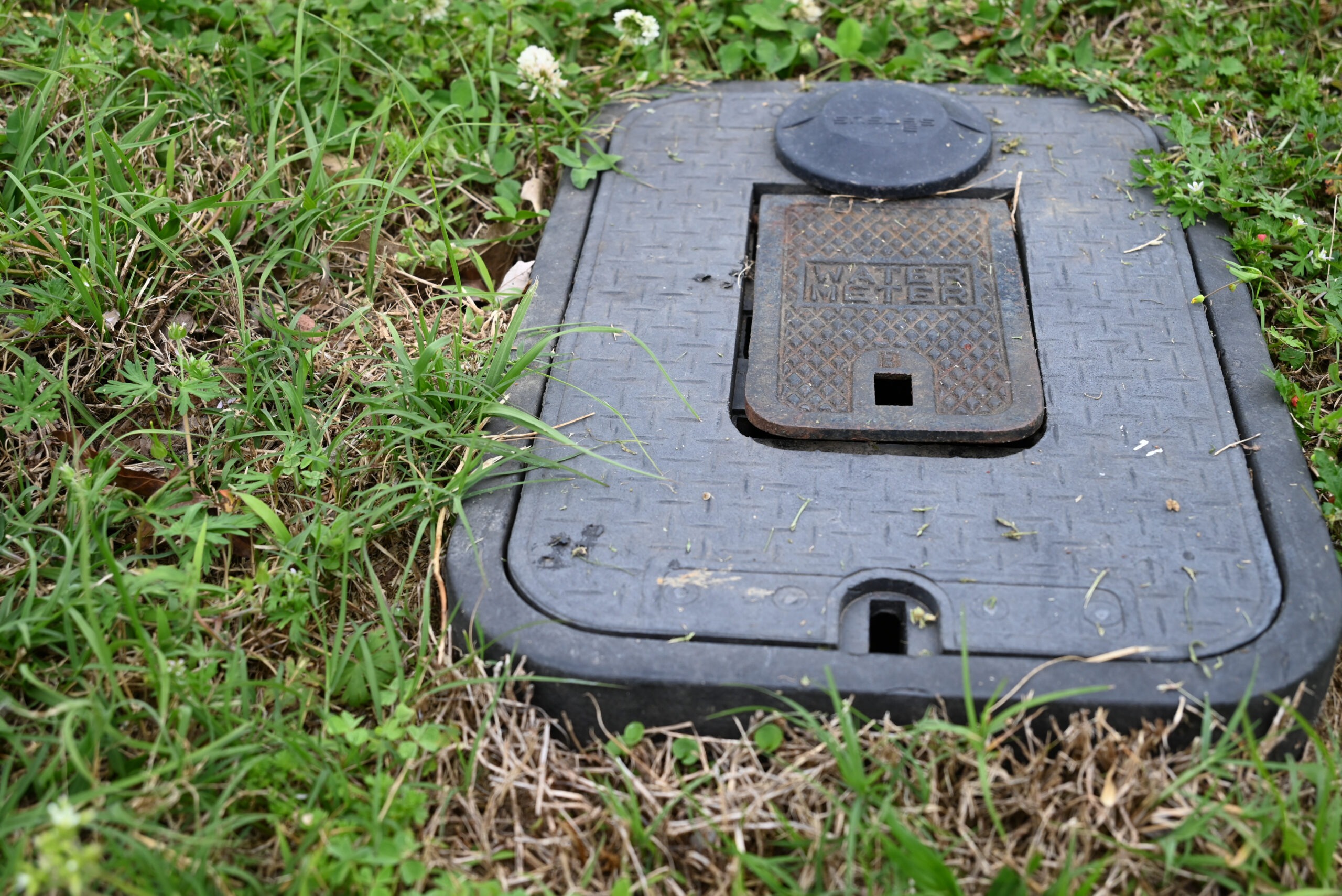
Your water meter measures how much water is used at your property and helps ensure accurate billing. Most residential meters are located near the street, typically in a meter box at the front of the property. Checking your meter can help you spot unusual use or potential leaks early.
Advanced Metering Infrastructure (AMI)
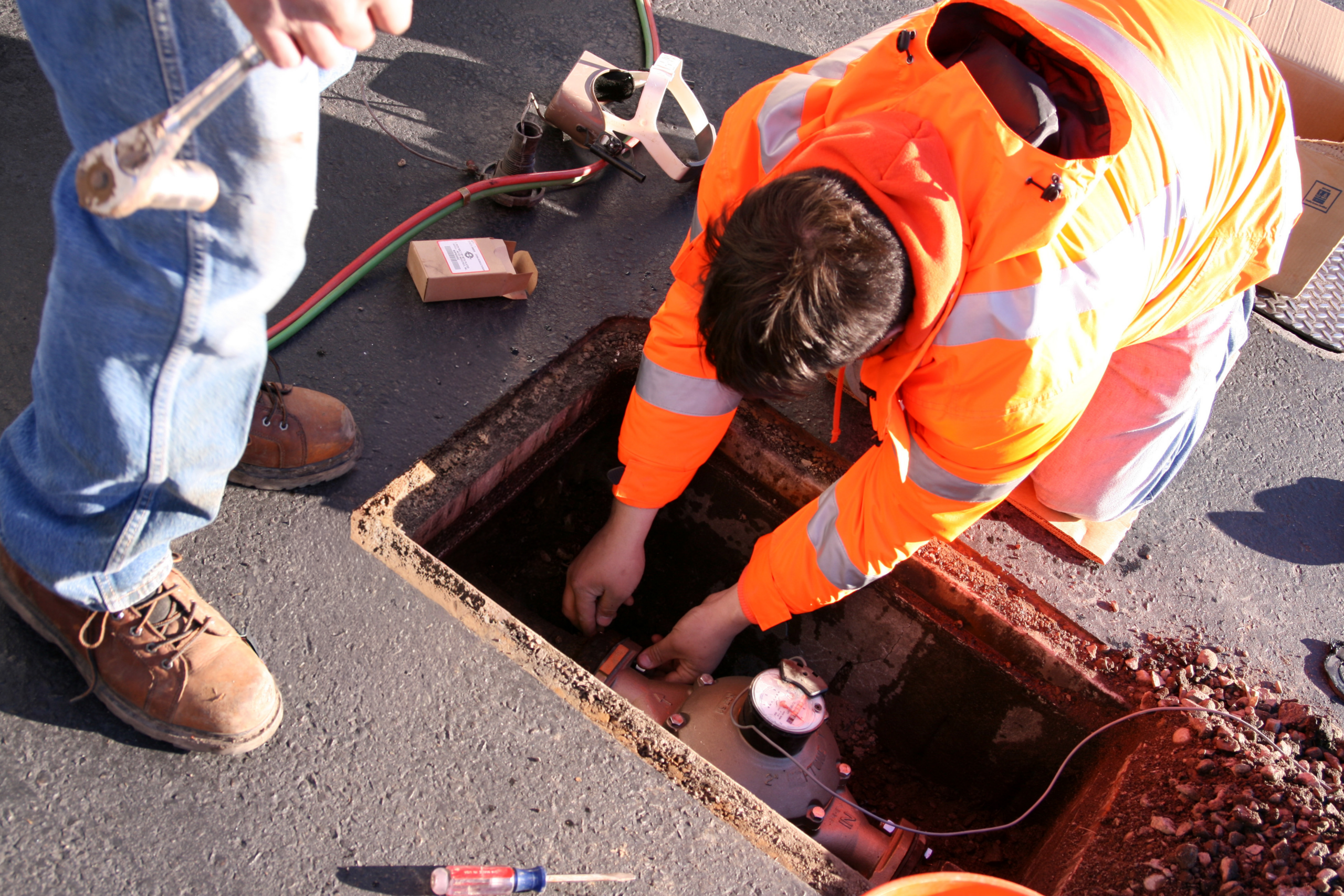
The District is upgrading to Advanced Metering Infrastructure (AMI) devices, sometimes known as “Smart Meters,” as part of an ongoing system improvement project. AMI -Smart meters automatically transmit water use data, allowing for more accurate readings, faster leak detection that can notify the customer and EOCWD when a meter is registering continuous flow, and improved customer service.
Although water service is automatically monitored, customers should still investigate any service disruptions.
Water Leaks, Water Outages, and Water Pressure
How do I…
Check our Water Emergencies page for live updates.
Main supply line to the house:
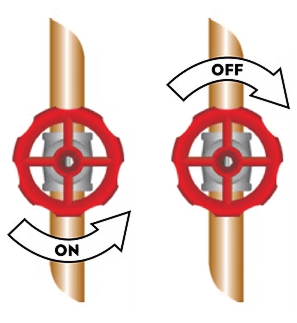
Close the main line valve Clockwise where the line enters the building.
At the meter:
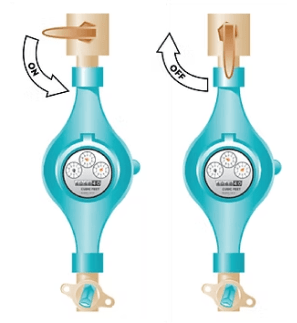
Open the Water Meter Box that is most likely located near the street in front of your house. Turn the shut-off valve clockwise one-quarter turn. Turning it counterclockwise could destroy the valve.
While you’re carefully watching your water usage, it’s important to make sure that water is not slipping away due to undetected leaks in your system. Here’s a simple procedure that can tell you if you have a leak and how much water you’re losing.
- Locate your water meter. It is usually located near the street in front of your home.
- Read the meter twice – first at night after the day’s water use has ended, and again in the morning before any water is used.
- Subtract the first number from the second reading to tell how much water (if any) leaked out overnight.
- If you suspect a leak, your pipes and connections should be checked and repaired quickly.
The toilet is a common source of unnoticed leaks. Undetected, hundreds of gallons of water can be wasted each day. Often leaks occur when the toilet is out of adjustment or parts are worn. Listening carefully for the sound of running water is a good way to detect a possible leak. Food coloring or a dye tablet added to the tank will also reveal water leaking into the toilet bowl. Drop it in the tank and don’t flush. If the water in the bowl turns color, you have a leak.
If you suspect a leak and need assistance in determining its location, please call our local office.
A leaking toilet can be annoying and wasteful. To check if your toilet has a leak, place a few drops of food coloring in the tank. If coloring is seen in the bowl without flushing, you have a leak. To pinpoint the leak, follow these simple steps:
If the tank is not filling with water, the flush ball is not returning to the seat properly.
- Check to see if the linkage that connects to the trip lever is hung up.
- If that doesn’t work, then the ball needs to be replaced. A flapper ball can replace a worn flush valve ball.
If the tank is full of water, and water is flowing into the overflow tube, then the valve is not shutting off correctly.
- Lift up on the float ball. If the water shuts off, then the ball is not sitting properly in the tank. This could be caused by two things:
- The ball has a leak and is full of water. Replace with another ball or flapper.
- The float ball needs adjusting. Use the screw at the base of the rod to lower the float ball so that the water level is 1/2 to 1 inch below the overflow tube.
- If water does not shut off when you lift on the float ball, then the valve itself needs to be repaired or replaced. Repair kits and new valves with easy-to-follow instructions are available at local hardware stores.
If water is not flowing into the overflow tube, but constantly runs or periodically turns on and off, the flush ball or flapper is not fitting snugly into the flush ball seat. When seats get old, they get pitted and allow water to leak past the seal and down the drain. Minerals and other deposits may also build up on the seat, making it rough.
- If worn, replace the flush ball or flapper.
- If the problem persists, the seat can be cleaned with steel wool, covered with a repair seal or replaced.
If your water is totally shut off, it has most likely been turned off at the meter or the house valve, and you should check to make sure that contractors, repair personnel or landscaper didn’t turn it off and forget to turn it back on. If the valve is open and you are still not receiving water (and it hasn’t been shut-off due to non-payment of your water bill), please call us at (714) 538-5815 to report the problem and to find out if there has been a water outage in your area that hasn’t yet been posted to this website.
Low water pressure is a phrase often used to describe what is technically a low flow situation, where one or more fixtures in a home do not provide adequate water flow. There is a relation between pressure and flow, but it is possible to have adequate water pressure but still have low flow out of one or more fixtures. For this section, we will use “Low Water Pressure” for both low water flow and low pressure, as they both have the same effect: not enough water being supplied to the fixture.
If the low-pressure conditions exist only at one or just a few fixtures, we have specific recommendations that may help. For all faucets check to see if your faucet supply valve (located under the sink) is open and that the supply line is not kinked or crushed. If it is, make sure you shut the valve (turn it to the right) and take the tubing with you so that you get the correctly sized replacement. You may also want to check and make sure that your faucet aerator is not clogged – these can be checked and cleaned by screwing them off and rinsing them out. Before replacing the aerator, run cold and hot water through the faucet for two minutes each to clear any sand or mineral debris that may have collected in the fixture.
For showers, remove the shower head by unthreading it from the pipe. It will turn to the left (counterclockwise) to unthread. Use a cloth over the shower head to protect it from tool marks. With the shower head off, try the water to see if there is adequate flow. If there is not, the problem is likely to be a defective tub spout diverter (if equipped) or a worn or defective mixing valve.
If the water seems adequate with the shower head off, look inside the threaded port. Shower heads may also have a filter screen or flow restrictor in them that can be seen just inside. The screen will trap sand, mineral buildup and other debris. Rinse the filter screen off, and if it comes clean easily, then inspect the nozzles on the outside. If the holes seem clogged with white mineral scale, you can sometimes disassemble the shower head to gain access to the nozzles. You may be able to dislodge the mineral build up by gently poking with a safety pin. Mineral scale can also be dissolved by soaking the shower head in a 50/50 solution of white vinegar and water, or using a commercial descaling chemical such as CLR or Lime-Away (note that some plastic showerheads may be marred by strong descaling chemicals, so test the chemical in an inconspicuous place first).
If every fixture in the house has low water pressure, the cause may be corroded piping, a restriction of the line due to a failed pressure relief valve (PRV) or backflow preventer, low municipal water flow or a partially closed valve. You may wish to consult a plumber if you are not easily able to diagnose and solve this problem (by opening a closed valve).

Water Leaks, Water Outages, and Water Pressure
How do I…
Check our Water Emergencies page for live updates.
Main supply line to the house:
Close the main line valve Clockwise where the line enters the building.
At the meter:
Open the Water Meter Box that is most likely located near the street in front of your house. Turn the shut-off valve clockwise one-quarter turn. Turning it counterclockwise could destroy the valve.
While you’re carefully watching your water usage, it’s important to make sure that water is not slipping away due to undetected leaks in your system. Here’s a simple procedure that can tell you if you have a leak and how much water you’re losing.
- Locate your water meter. It is usually located near the street in front of your home.
- Read the meter twice – first at night after the day’s water use has ended, and again in the morning before any water is used.
- Subtract the first number from the second reading to tell how much water (if any) leaked out overnight.
- If you suspect a leak, your pipes and connections should be checked and repaired quickly.
The toilet is a common source of unnoticed leaks. Undetected, hundreds of gallons of water can be wasted each day. Often leaks occur when the toilet is out of adjustment or parts are worn. Listening carefully for the sound of running water is a good way to detect a possible leak. Food coloring or a dye tablet added to the tank will also reveal water leaking into the toilet bowl. Drop it in the tank and don’t flush. If the water in the bowl turns color, you have a leak.
If you suspect a leak and need assistance in determining its location, please call our local office.
A leaking toilet can be annoying and wasteful. To check if your toilet has a leak, place a few drops of food coloring in the tank. If coloring is seen in the bowl without flushing, you have a leak. To pinpoint the leak, follow these simple steps:
If the tank is not filling with water, the flush ball is not returning to the seat properly.
- Check to see if the linkage that connects to the trip lever is hung up.
- If that doesn’t work, then the ball needs to be replaced. A flapper ball can replace a worn flush valve ball.
If the tank is full of water, and water is flowing into the overflow tube, then the valve is not shutting off correctly.
- Lift up on the float ball. If the water shuts off, then the ball is not sitting properly in the tank. This could be caused by two things:
- The ball has a leak and is full of water. Replace with another ball or flapper.
- The float ball needs adjusting. Use the screw at the base of the rod to lower the float ball so that the water level is 1/2 to 1 inch below the overflow tube.
- If water does not shut off when you lift on the float ball, then the valve itself needs to be repaired or replaced. Repair kits and new valves with easy-to-follow instructions are available at local hardware stores.
If water is not flowing into the overflow tube, but constantly runs or periodically turns on and off, the flush ball or flapper is not fitting snugly into the flush ball seat. When seats get old, they get pitted and allow water to leak past the seal and down the drain. Minerals and other deposits may also build up on the seat, making it rough.
- If worn, replace the flush ball or flapper.
- If the problem persists, the seat can be cleaned with steel wool, covered with a repair seal or replaced.
If your water is totally shut off, it has most likely been turned off at the meter or the house valve, and you should check to make sure that contractors, repair personnel or landscaper didn’t turn it off and forget to turn it back on. If the valve is open and you are still not receiving water (and it hasn’t been shut-off due to non-payment of your water bill), please call us at (714) 538-5815 to report the problem and to find out if there has been a water outage in your area that hasn’t yet been posted to this website.
Low water pressure is a phrase often used to describe what is technically a low flow situation, where one or more fixtures in a home do not provide adequate water flow. There is a relation between pressure and flow, but it is possible to have adequate water pressure but still have low flow out of one or more fixtures. For this section, we will use “Low Water Pressure” for both low water flow and low pressure, as they both have the same effect: not enough water being supplied to the fixture.
If the low-pressure conditions exist only at one or just a few fixtures, we have specific recommendations that may help. For all faucets check to see if your faucet supply valve (located under the sink) is open and that the supply line is not kinked or crushed. If it is, make sure you shut the valve (turn it to the right) and take the tubing with you so that you get the correctly sized replacement. You may also want to check and make sure that your faucet aerator is not clogged – these can be checked and cleaned by screwing them off and rinsing them out. Before replacing the aerator, run cold and hot water through the faucet for two minutes each to clear any sand or mineral debris that may have collected in the fixture.
For showers, remove the shower head by unthreading it from the pipe. It will turn to the left (counterclockwise) to unthread. Use a cloth over the shower head to protect it from tool marks. With the shower head off, try the water to see if there is adequate flow. If there is not, the problem is likely to be a defective tub spout diverter (if equipped) or a worn or defective mixing valve.
If the water seems adequate with the shower head off, look inside the threaded port. Shower heads may also have a filter screen or flow restrictor in them that can be seen just inside. The screen will trap sand, mineral buildup and other debris. Rinse the filter screen off, and if it comes clean easily, then inspect the nozzles on the outside. If the holes seem clogged with white mineral scale, you can sometimes disassemble the shower head to gain access to the nozzles. You may be able to dislodge the mineral build up by gently poking with a safety pin. Mineral scale can also be dissolved by soaking the shower head in a 50/50 solution of white vinegar and water, or using a commercial descaling chemical such as CLR or Lime-Away (note that some plastic showerheads may be marred by strong descaling chemicals, so test the chemical in an inconspicuous place first).
If every fixture in the house has low water pressure, the cause may be corroded piping, a restriction of the line due to a failed pressure relief valve (PRV) or backflow preventer, low municipal water flow or a partially closed valve. You may wish to consult a plumber if you are not easily able to diagnose and solve this problem (by opening a closed valve).
Water Quality
EOCWD provides safe, reliable, high-quality drinking water that meets all state and federal standards. Water quality is regularly tested to ensure it is safe for our community. The District conducts ongoing monitoring and publishes water quality reports so customers stay informed.
The District is actively monitoring PFAS and complying with all applicable state regulations through its new treatment facility. To learn more about PFAS, and water quality, taste or odor, visit our Frequently Asked Questions below or contact us.

Lead & Copper
As required under the Lead and Copper Rule, the District completed its lead service line inventory in 2024 as explained in its Non-Lead Written Statement, confirming there are no known lead or galvanized service lines requiring replacement within the distribution system.
Appearance
Some customers may occasionally notice cloudy or milky-looking water caused by entrained air. This occurs when tiny harmless air bubbles are present in the water and typically clears within a few seconds. Entrained air does not affect water quality and is a common condition.
If you have any questions about water quality, appearance or testing, please read our frequently asked questions below.

Frequently Asked Questions About Your Water

These are some common questions regarding issues with water delivered to the home and water quality. If you have any additional questions, you can contact us and we will be happy to help.
Household Concerns
Water Quality
We disinfect your water to ensure that it is free of harmful bacteria. To reduce any chlorine taste or smell, try refrigerating your water before drinking.
Tap water providers and bottled water providers must meet the same water quality standards. In fact, tap water providers are required to conduct more frequent water quality testing and reporting than bottled water providers. Some consumers prefer the taste of bottled water, and some choose bottled water because they have special health needs. But tap water is a much better deal at costs of 1,000 times less than bottled water.
Color in water is usually caused by naturally occurring organic matter, minerals, or mineral build-up in the pipes. We flush our water system regularly to clean mineral build-up and other sediment from the pipes. If you receive discolored water, you should let your faucets run until the water is clear. Such substances typically do not pose a health hazard; however, we ask that you please report any instances of discolored water so that we may investigate.
The most common cause of odor in hot water is the water heater. If your cold water smells fine, check your water heater to ensure that the temperature setting is correct. Water heaters also need to be maintained (see manufacturer’s instructions). Please contact us if the odor persists or if it is present in both the hot and cold water.
According to the United States Environmental Protection Agency, home treatment units are rarely necessary for health reasons. Most often, water treatment units are used to remove substances that affect the aesthetic qualities of the water. If you do choose to install a home treatment unit, it is important to follow the manufacturer’s maintenance instructions, because improperly maintained units can cause water quality problems.
Clean your coffee maker with vinegar and water as directed by the manufacturer.
The hardness of water varies with the water’s source. The choice to buy a softener is an aesthetic one, since hard water is not harmful to health. However, water softeners typically increase the sodium content of the water, a factor that should be considered by people on low-sodium diets.
Spots are caused by hard water, or minerals that remain after the water has evaporated. Spots can be eliminated through use of a dishwasher rinse agent.
For more information on PFAS, visit OCWD.com.
Or click to view our fact-sheet: Addressing PFOA/PFOS in Orange County
Water sources change at certain times of the year due to the availability of supplies. Surface water, or water that comes from sources like rivers and lakes, tends to taste slightly different than water pumped from underground aquifers.
Dirt or sand can occur naturally in groundwater or because of a water line repair. We try to reduce the instances of dirt or sand in the water through regular flushing, which improves water quality by increasing the circulation of water in the pipes and removing most of the sediment from the water. But if you water appears muddy, please contact the water district immediately.
We disinfect your water to ensure that it is free of harmful bacteria. To reduce any chlorine taste or smell, try refrigerating your water before drinking.
Disinfectants are required because they prevent the spread of germs that cause diseases. Years ago, before disinfectants were used for drinking water, diseases such as cholera, typhoid fever, and dysentery were common. Drinking water disinfection has vastly improved the quality and safety of drinking water.
We conduct regular water system flushing to remove any mineral build-up and sediment from the pipes and to ensure that water circulates adequately throughout the system. Fire hydrants may also be opened to conduct fire-flow capability tests.
Tap water providers and bottled water providers must meet the same water quality standards. In fact, tap water providers are required to conduct more frequent water quality testing and reporting than bottled water providers. Some consumers prefer the taste of bottled water, and some choose bottled water because they have special health needs. But tap water is a much better deal at costs of 1,000 times less than bottled water.
The most common cause of odor in hot water is the water heater. If your cold water smells fine, check your water heater to ensure that the temperature setting is correct. Water heaters also need to be maintained (see manufacturer’s instructions). Please contact us if the odor persists or if it is present in both the hot and cold water.
According to the United States Environmental Protection Agency, home treatment units are rarely necessary for health reasons. Most often, water treatment units are used to remove substances that affect the aesthetic qualities of the water. If you do choose to install a home treatment unit, it is important to follow the manufacturer’s maintenance instructions, because improperly maintained units can cause water quality problems.
The hardness of water varies with the water’s source. The choice to buy a softener is an aesthetic one, since hard water is not harmful to health. However, water softeners typically increase the sodium content of the water, a factor that should be considered by people on low-sodium diets.
A milky or cloudy appearance is usually caused by air bubbles in the water, which pose no health risk. If the water is allowed to sit, the air will dissipate and the water will clear. If the cloudiness does not disappear, please contact us so that we may investigate.
We’re here to help.
If you are experiencing disruptions to your water service, send us a message and we’ll resolve it as soon as possible.